

Personalized briefing
Top 5 discoveries · Artificial Intelligence
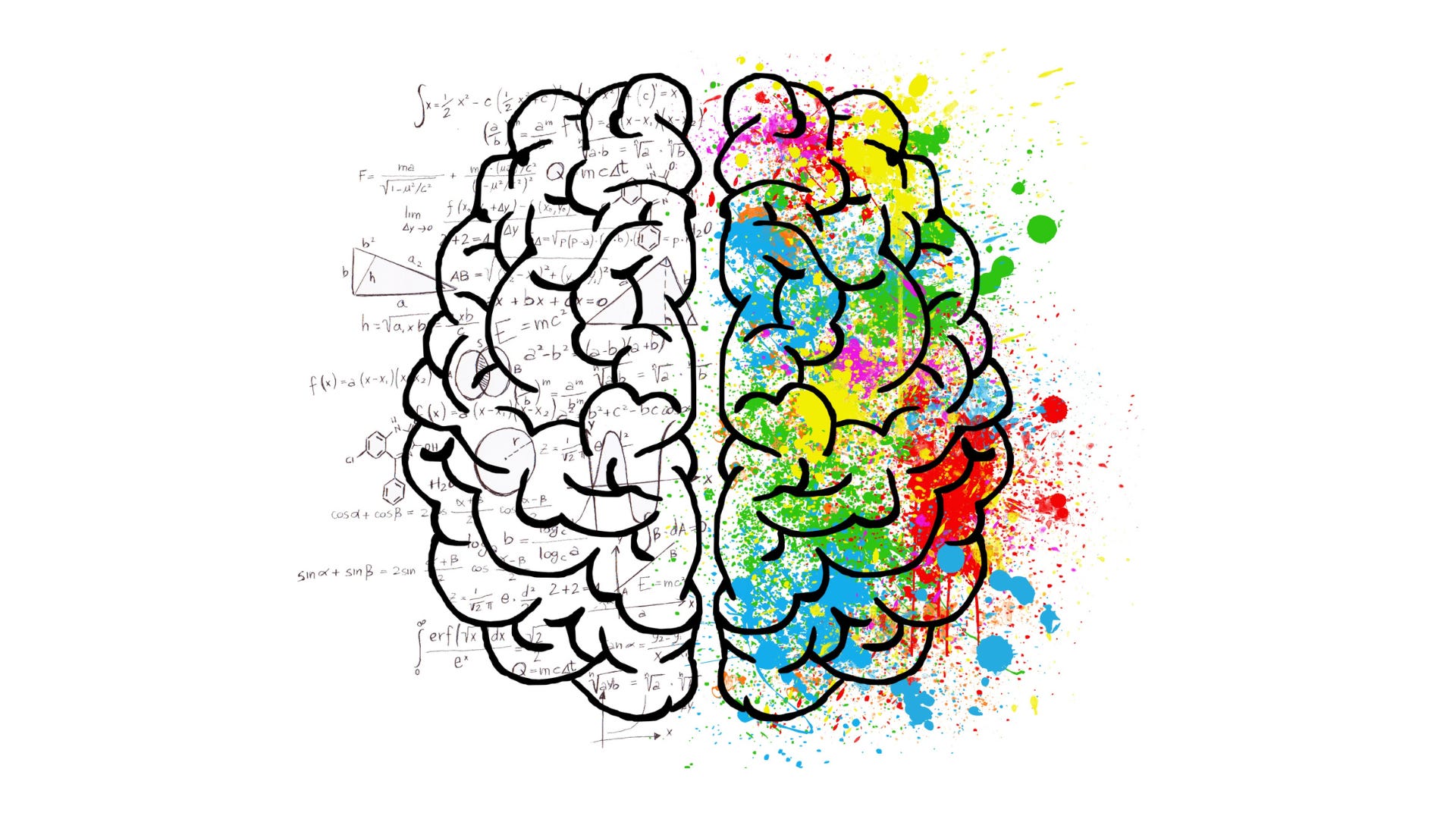
An audio-visual fusion emotion generation model based on neuroanatomical alignment
Dear Ian Eslick — this week’s five most relevant discoveries, curated for your work in Artificial Intelligence.
Key findings
Computer Science · Artificial Intelligence
No. 1
The proposed system treats neuroanatomical alignment as the organizing constraint for fusing audio and visual signals in emotion generation. It therefore moves beyond generic multimodal concatenation by making cross-modal correspondence depend on a biologically grounded alignment structure. For your HCI work, that is a concrete design pattern for affect-aware interfaces where generated emotional responses must remain consistent across speech and facial or visual channels.
Novelty
84%
Rigor
72%
Significance
78%
Validity
74%
Clarity
86%
Computer Science · Artificial Intelligence
No. 2
The intersection of image enhancement, scaling, and metric precision for future AI systems
The review quantifies how image enhancement and scaling choices affect the validity of AI evaluation metrics and benchmark reproducibility. It proposes the Perceptual Integrity Measure, a deterministic no-reference score that aggregates perceptual image features into a single integrity metric across imaging conditions. For AI systems and data-science practice, this matters because preprocessing and resolution changes can silently shift model comparisons, so benchmark design should test metric sensitivity explicitly.
Novelty
82%
Rigor
90%
Significance
86%
Validity
88%
Clarity
92%
Computer Science · Machine Learning
No. 3
A Geometry-Aware Bio-Inspired Sparse Reservoir With Online Learning
The reservoir-computing framework builds a sparse recurrent matrix from FitzHugh–Nagumo units and cortical connectivity motifs including reciprocity, triadic closure, and Dale’s law. An anchor-proximal ridge objective on streaming windows provides stable online readout learning with lower memory and state-storage requirements than conventional recurrent approaches. For AI systems targeting efficient online adaptation, this is a useful template for combining biologically structured dynamics with low-footprint learning in resource-constrained settings.
Novelty
88%
Rigor
90%
Significance
82%
Validity
87%
Clarity
89%
Computer Science · Data Science
No. 4
Beyond Global and Individual Models: Tensorized Multitask Regression for Personalized Learning from High-Dimensional Data
The paper develops tensorized multitask regression to model personalized high-dimensional data without collapsing to either a single global model or fully separate individual models. Its framing implies shared structure across tasks is represented in tensor form while still allowing person-specific variation. For data-science and AI applications, this is relevant to personalized prediction problems where data are high-dimensional, heterogeneous, and too sparse for per-user models.
Novelty
80%
Rigor
78%
Significance
76%
Validity
77%
Clarity
83%
Computer Science · Optimization
No. 5
Neurodynamic Approaches With Fixed-Step Optimality for Rank Minimization: A Data-Driven Framework
The paper introduces neurodynamic approaches designed for fixed-step optimality in rank minimization within a data-driven framework. This combination targets stable optimization behavior under fixed steps, which is important when rank constraints are used in learned or data-adaptive pipelines. For AI problem solving, low-rank optimization of this kind is relevant to model compression, denoising, and structured representation learning where computational predictability matters.
Novelty
85%
Rigor
76%
Significance
74%
Validity
75%
Clarity
80%
Advertisement
GroupRFQ — join group deals on lab & medical equipment. Pool orders, unlock volume pricing. See open deals →
Your briefing is personalized based on your selected fields, keywords, and research interests.